BURIED TOGETHER
Partner William "Willie" Fullerton, Hugh Walpole
Queer Places:
Queen Anne's Gate, London SW1H 9BT, United Kingdom
The Cobbles Polperro, The Warren, Polperro, Looe, PL13 2RD, Cornwall, United Kingdom
All Saints Churchyard, Croft Ln, Crondall, Farnham GU10 5QF, United Kingdom
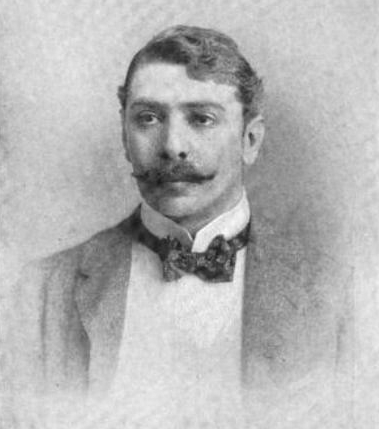 Percy Anderson (March 22, 1851 – October 30, 1928) was one of the premier English stage costume designers and artists of the late Victorian and Edwardian eras. Renowned
for his vivid watercolor sketches and rich historical detail, Anderson designed costumes for Richard D'Oyly Carte’s original Gilbert and Sullivan operas, Sir Herbert
Beerbohm Tree’s grand Shakespearean revivals, and major West End theatrical productions.
Percy Anderson (March 22, 1851 – October 30, 1928) was one of the premier English stage costume designers and artists of the late Victorian and Edwardian eras. Renowned
for his vivid watercolor sketches and rich historical detail, Anderson designed costumes for Richard D'Oyly Carte’s original Gilbert and Sullivan operas, Sir Herbert
Beerbohm Tree’s grand Shakespearean revivals, and major West End theatrical productions.
Beyond his celebrated career in the theater, Anderson was a central figure in turn-of-the-century London's bohemian, artistic, and queer social networks. Living at a
time when male homosexuality was strictly outlawed in Britain, he forged lasting, intimate partnerships with key cultural figures of his day.
Anderson initially trained as a painter and portraitist before turning his talents to the stage. His precise sense of color and period tailoring quickly caught the eye
of West End producers.
He became the go-to costume designer for the D'Oyly Carte Opera Company, designing original wardrobes for iconic comic operas including Utopia, Limited (1893) and The
Grand Duke (1896), as well as numerous revivals at the Savoy Theatre.
In 1906, he illustrated Mrs. Edith Aria’s influential book, Costume: Fanciful, Historical and Theatrical, cementing his reputation as an authority on historic
dress.
Operating discreetly within artistic circles, Anderson maintained significant relationships with men in the arts throughout his life:
Early in his career, Anderson shared a beautifully appointed London apartment with the young American composer
William "Willie" Fullerton. Their residence became a vibrant salon for actors, musicians, and artists. When Fullerton
tragically died of consumption in 1888, Anderson wrote a heartfelt letter to Fullerton's father, openly sharing his grief over the loss of his partner and highlighting the
quiet commitment of their shared life.
In 1910, the nearly 60-year-old Anderson formed a close emotional bond with the rising 26-year-old novelist Sir Hugh Walpole,
who spent much of his life searching for "the perfect friend". Despite their 33-year age difference, the connection was deeply affectionate and grounded in mutual
emotional need. Walpole recorded in his journal: "He has all the knowledge and reminiscence of his age, and doesn't seem in the very least bit old. Anyhow he wants
somebody and I want somebody, so that's all right."
Together, the pair set up a domestic sanctuary at "The Cobbles," an 18th-century whitewashed fisherman’s cottage in the coastal village of Polperro, Cornwall. During
the pre-WWI years, the cottage served as a quiet, idyllic refuge away from the scrutiny of London society.
Anderson held onto the Polperro retreat for many years, though the post-WWI rise in local tourism and regional gossip eventually prompted him to look for "somewhere
more open, and with less village gossip and intrigue" before his death in 1928.
References:
Other references:
- Hart-Davis, Rupert. Hugh Walpole: A Biography. London: Macmillan, 1952.
- Aria, Edith. Costume: Fanciful, Historical and Theatrical. Illustrated by Percy Anderson. London: Macmillan & Co., 1906.
- The Times Obituary Notice. "Mr. Percy Anderson." The Times, London, 31 October 1928, p. 16.
- Somerset & Wood Fine Art. "Anderson, Percy (1851–1928): Artist Profile & Historical Summary."
- The Hunterian Museum & Art Gallery. "Looking Back on 'Stage and Screen'." University of Glasgow.
- Mainwaring, Marion. Mysteries of Paris: The Quest for Morton Fullerton. University of New England Press, 2001.
- Gänzl, Kurt. The Encyclopedia of the Musical Theatre. 2nd ed., Schirmer Books, 2001.
- The Harry Ransom Center Collection. Percy Anderson Designs & Papers. The University of Texas at Austin.
Support this project
This website is a passion project researched, developed, and funded entirely by me. If you find the content valuable and would like to help support the ongoing research and hosting costs, any contribution is deeply appreciated.
Thank you for keeping this independent resource alive!
My books on Amazon: Elisa Rolle's books
BACK TO HOME PAGE